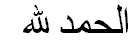

Devotional Phrases in Arabicupdated 25-Aug-2010 al hamdulillāh al = the All praise is for Allāh. All praise is to Allāh. (hw238)
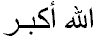
allāhu akbar allāh =
allāh Allāh is great. Allāh is most great. Allāh is the greatest great.
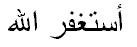
astaghfirullāh asta =
derived verb prefix which denotes seeking, asking
astaghfirullāh is sometimes said in response to a compliment, as if to
say Allah please protect me from pride and vanity.
bismillāh ir-rahmān ir-rahīm bi = with,
to for, in, through
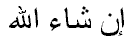
With the guidance of Allāh, most beneficent and most compassionate. in-shā'-llāh in = if
lā
hawla
wa lā quwwata illā
billāh lā = no,
not, none, neither
There is neither change nor power except through Allāh. There is no power or strength except through Allāh. Please see the tahwil page for more information
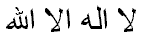
lā ilāha illā-llāh lā = no, not, none, neither
Please see the tahlil page for more
information.
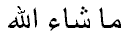
mā-shā'-llāh
mā; = what, whatever, that
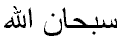
subhāna -llāh
subḥān = praised, glory be to; all-perfect, all-pure, all-glorious Holy is Allāh. Allāh is far from any imperfection. a declaration (or celebration) of the absolute perfection (or glory) of Allāh. (see example of usage in Qur'an 23:91)
(hw457, ewl1290)
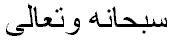
subhāna wa ta'alā subḥāna
= praised, glory be to
'ishq = unconditional love, divine
love; A mantra, literally saying that Allāh is Love, Allāh is Beloved. Poetically interpreted by Hazrat Inayat Khan as: God is love, lover and beloved. (hw719, 686)
See also: Glossary of terms used by Hazrat Inayat Khan Notes: 4. For compatibility with most web browsers, the long vowels are indicated as ā (pronounced like the a in father), ī (pronounced like the ee in deep) and ū (pronounced like the oo in moot). 5. The notations such as (hw238) refer to the page number in the Hans Wehr Arabic-English Dictionary.
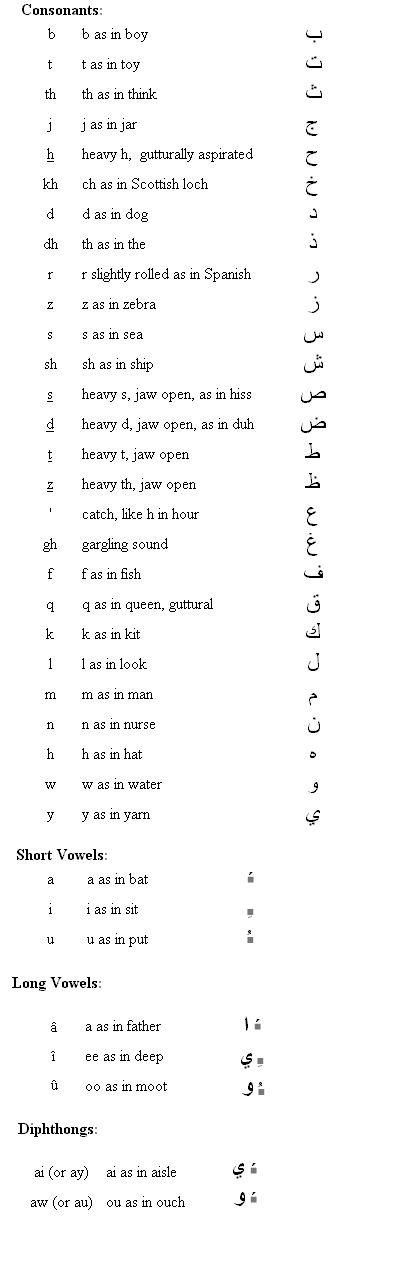
Simplified Transliteration and Pronunciation:
Dictionary of the Holy Qur'ān, Abdul Mannān Omar... truly a precious gift to those who speak English, this magnificent dictionary translates every classical Arabic word used used in the Qur'ān into English, giving the Arabic root word followed by English translations of every form of that root which appears in the Qur'ān. This dictionary is easy to use, is relatively inexpensive and is based on classical Arabic. An Arabic-English Lexicon, Edward W. Lane... an eight volume masterpiece of classical Arabic which includes plentiful examples of classical usage and meanings of words during the time period that the Qur'ān was revealed. Indexed by Arabic roots, with definitions in English. A Dictionary and Glossary of the Koran, John Penrice... quite useful, but occasionally relies upon somewhat less accurate references than the previously cited works by Lane and Omar. Vocabulary of the Holy Quran,
compiled by Abdullah Abbas al-Nadwi... the definitions are very brief and rarely
cover the true breadth of meaning of the words. References On-Line: http://open.xerox.com/Services/arabic-morphology ... amazing lexical analysis http://www.loc.gov/catdir/cpso/roman.html ... Library of Congress transliteration scheme www.muslim.org/english-quran/a-translit.pdf ... guide to transliteration A web page digging into the differences and similarities of the Arabic words Nabi and Rasul. Glossary of terms used by Hazrat Inayat Khan al hamdulillah, allahu akbar, astaghfirullah, bismillah ir rahman ir rahim, inshallah, mashallah, subhan allah, subhana wa ta ala, la hawla wa la quwwata illa billah, la ilaha illa allah, la ilaha ill allah, la ilaha illa llah |